

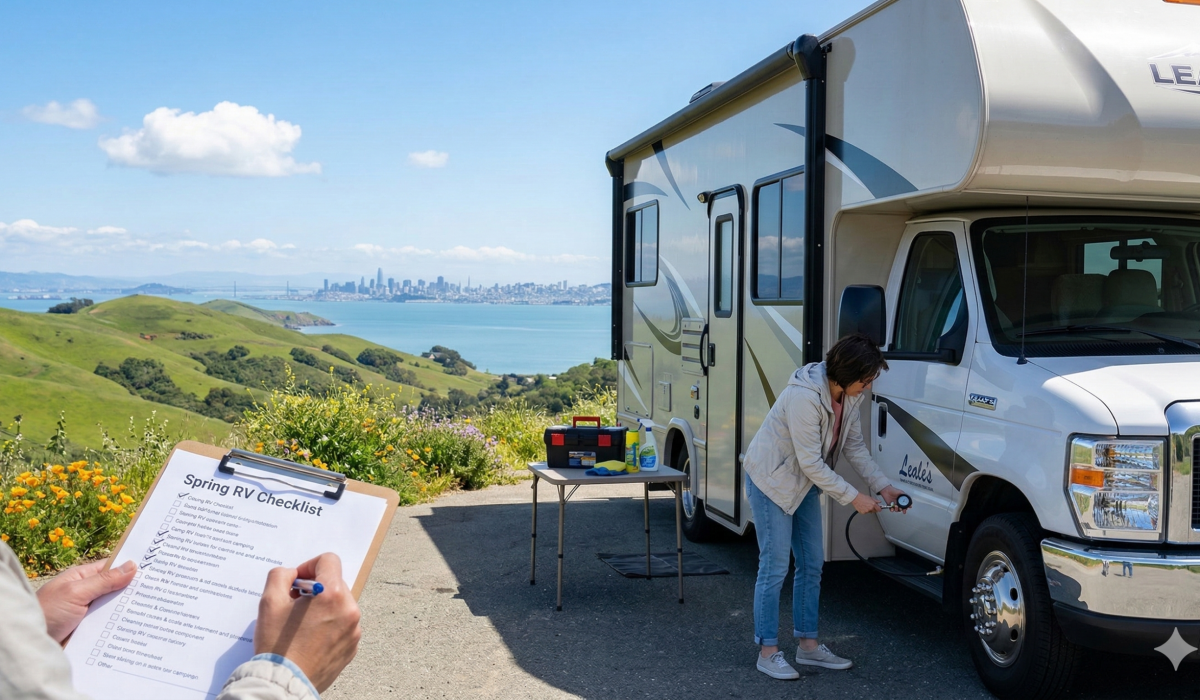
Spring is almost here, and that means camping season is right around the corner! After months of winter storage or limited use, your RV needs proper preparation before hitting California’s highways and campgrounds. Whether you’re planning spring break trips to the coast, summer adventures to Yosemite, or weekend getaways to nearby state parks, proper spring prep ensures your RV is safe, reliable, and ready for adventure.
This comprehensive spring preparation guide from Leale’s RV—serving San Jose and Bay Area RV owners for over 15 years—covers everything you need to do right now (February-March) to prepare your motorhome, travel trailer, or 5th wheel for the upcoming camping season.
Why Spring Preparation Matters in the Bay Area
Bay Area winters are mild compared to other regions, but they still impact your RV:
Winter challenges your RV faced:
- Rain exposure – Bay Area received significant rainfall this winter, potentially causing roof leaks
- Temperature fluctuations – 40°F nights to 65°F days stress seals and components
- Humidity changes – Moisture buildup inside stored RVs
- Limited use – Sitting unused allows problems to develop
- Rodent activity – Winter months bring mice and rats seeking shelter
Spring prep prevents:
- Breakdowns during your first trip
- Discovering problems at the campground
- Expensive emergency repairs
- Unsafe travel conditions
- Ruined family vacations
The goal: Start camping season with confidence, not surprises.
When to Start Spring RV Prep
Best timing for Bay Area RV owners:
February (NOW!) – Ideal time to start
- Schedule professional inspections before shops get busy
- Parts are more readily available
- Gives time to address issues before camping season
- Beat the March-April rush
March – Peak prep season
- Everyone else is doing it – expect longer wait times
- Shop schedules fill up quickly
- Parts may be backordered
April – Last minute (too late!)
- Rushed repairs increase mistakes
- Limited appointment availability
- May miss early camping trips
Pro tip: Schedule your spring service NOW at Leale’s RV to avoid the rush: (408) 286-5353
Spring RV Preparation Checklist
STEP 1: Exterior Inspection (30 minutes)
Walk around your RV looking for winter damage:
Roof inspection:
- Check for any leaks or water stains inside
- Inspect roof seals around vents, AC unit, skylights
- Look for cracks or separation in sealant
- Check for debris in roof valleys
- Verify roof membrane condition (no bubbling or cracks)
Body and exterior:
- Inspect for any new dents, scratches, or damage
- Check all exterior lights (headlights, taillights, markers)
- Verify slide-out seals are intact
- Inspect awning fabric for tears or mold
- Check entry door and cargo bay seals
- Look for signs of rodent entry (droppings, chewed materials)
Tires:
- Check tire pressure (inflate to maximum PSI on sidewall)
- Inspect for cracks, especially sidewall cracking from UV exposure
- Check tread depth (minimum 4/32″ for RVs)
- Verify tire age (replace at 7 years regardless of condition)
- Look for uneven wear or flat spots from sitting
Underbody:
- Look for any fluid leaks
- Check for damage to underbelly or tanks
- Inspect suspension and steering components
- Verify exhaust system is secure
Bay Area winter damage to watch for:
- Water intrusion from heavy rains
- Seal deterioration from temperature swings
- Rodent damage (common in stored RVs)
- Mold or mildew from humidity
STEP 2: Interior Deep Clean (2-3 hours)
After winter storage, your RV needs thorough cleaning:
Remove winter storage items:
- Take out moisture absorbers (DampRid, etc.)
- Remove any pest deterrents
- Check for signs of moisture or mold
- Verify no rodent activity
Deep clean interior:
- Vacuum all carpets and upholstery
- Wipe down all surfaces with appropriate cleaners
- Clean windows inside and out
- Wash all bedding, curtains, and towels
- Clean refrigerator thoroughly
- Scrub bathroom and kitchen
- Vacuum air vents and returns
- Clean furnace ducting if dusty
Check for winter damage:
- Look for water stains or damage
- Check for mold or mildew (common after Bay Area winter)
- Inspect for rodent droppings or chewing
- Verify all cabinets and drawers work properly
Deodorize:
- Air out RV completely (open windows and vents)
- Use RV-specific deodorizers if musty
- Clean holding tanks thoroughly
STEP 3: De-Winterize Water System (1-2 hours)
Even in mild Bay Area winters, proper water system prep is essential:
Flush antifreeze from system:
- Open all faucets (hot and cold)
- Run water until clear (no pink antifreeze)
- Flush toilet until clear
- Run outside shower until clear
- Drain and flush hot water heater
Sanitize fresh water system:
- Mix 1/4 cup bleach per 15 gallons of tank capacity
- Fill fresh water tank
- Pump water through all faucets until you smell bleach
- Let sit 12 hours
- Drain completely
- Refill with fresh water and flush until no bleach smell
Inspect plumbing:
- Check for leaks at all connections
- Verify water pump operates properly
- Test water heater (gas and electric)
- Check city water connection
- Inspect all faucets and fixtures
Holding tanks:
- Completely drain and flush black tank
- Drain and flush gray tank
- Add enzyme treatment to black tank
- Check tank sensors (may need cleaning)
Bay Area tip: Even though we rarely freeze, antifreeze prevents stagnant water issues during storage.
STEP 4: Mechanical System Checks (Motorhomes)
Engine and transmission:
- Check oil level (add if needed, schedule change if due)
- Verify coolant level and condition
- Check transmission fluid level and color
- Inspect all belts and hoses for cracks
- Test battery voltage (should be 12.6V+)
- Clean battery terminals if corroded
- Check windshield washer fluid
Test all systems:
- Start engine and verify no warning lights
- Check for unusual noises or vibrations
- Test all gauges
- Verify AC and heat work properly
- Test wipers and washer
- Check all lights and signals
Brakes:
- Test brake pedal feel (should be firm)
- Listen for unusual noises when braking
- Schedule brake inspection if uncertain
- Check brake fluid level
If stored for 4+ months: Schedule professional service at Leale’s RV for oil change and complete inspection.
STEP 5: Generator Service (45 minutes)
Critical after winter storage:
Test generator:
- Start generator (may take several attempts after storage)
- Let warm up 5 minutes
- Run under load (turn on AC, microwave, etc.) for 30+ minutes
- Listen for unusual sounds
- Check oil level after running
Common generator issues after winter:
- Carburetor varnish from old fuel (most common)
- Stale fuel causing poor performance
- Battery too weak to start generator
- Oil level low from sitting
If generator won’t start or runs poorly:
- Add fresh fuel and fuel stabilizer
- Try again after fuel circulates
- If still problematic, schedule service at Leale’s RV
Bay Area generator tip: Run monthly even during winter to prevent carburetor issues.
STEP 6: Propane System Check (20 minutes)
Safety-critical system:
Inspect propane:
- Check tank levels
- Verify tanks are secured properly
- Inspect all connections for damage
- Perform leak test (soapy water on connections)
- Check for any propane odor
Test propane appliances:
- Stove and oven
- Furnace
- Water heater (LP mode)
- Refrigerator (LP mode)
- Any other LP appliances
Replace if needed:
- Expired propane tanks (check date stamped on tank)
- Damaged or cracked hoses
- Faulty regulators
When to call professional:
- Any propane smell or suspected leak
- Appliances won’t light or stay lit
- Regulator makes hissing sounds
STEP 7: Electrical System Testing (30 minutes)
Test all 12V systems:
- All interior lights
- Water pump
- Furnace fan
- Slide-out operation
- Awning (if electric)
- Steps (if electric)
- All switches and controls
Test 110V systems:
- Plug into shore power
- Test all outlets (use plug-in tester)
- Run microwave
- Test AC units
- Verify refrigerator works on electric
- Check converter operation
- Test any other 110V appliances
Check batteries:
- House batteries fully charged
- Chassis battery fully charged (motorhomes)
- Clean terminals
- Check water levels (flooded batteries)
- Verify battery isolator works (motorhomes)
Common electrical issues after storage:
- Dead or weak batteries
- Corrosion on connections
- Blown fuses from power surges
- Converter issues
STEP 8: Climate Control Systems (45 minutes)
Air conditioning:
- Clean or replace AC filters
- Remove covers from exterior AC units
- Test cooling operation (run 20+ minutes)
- Check for proper cooling and airflow
- Listen for unusual sounds
- Verify thermostat works correctly
Heating system:
- Test furnace operation
- Check thermostat
- Verify proper heat output
- Listen for normal operation
- Ensure exhaust vent is clear
Why test AC now? May seems early, but California camping season starts soon. First hot weekend at the lake, you’ll want working AC!
STEP 9: Appliances and Systems (1 hour)
Test every appliance:
Refrigerator:
- Test on both LP and electric
- Verify it cools properly
- Check for unusual sounds
- Clean coils if accessible
- Ensure door seals properly
Stove/oven:
- Test all burners
- Test oven heating
- Clean burners and oven
- Check igniters work
Microwave:
- Test heating function
- Clean interior
Water heater:
- Test on both gas and electric
- Verify it heats water
- Check for leaks
- Inspect anode rod (annual check)
Slide-outs:
- Extend and retract all slides
- Listen for unusual sounds
- Clean and lubricate seals
- Check for proper operation
Awning:
- Extend fully (clean and dry day)
- Inspect fabric for tears or mold
- Clean if dirty
- Lubricate arms and mechanisms
- Retract and verify works properly
STEP 10: Safety Equipment Check (15 minutes)
Critical safety items:
Fire safety:
- Test smoke detector (replace battery if needed)
- Check fire extinguisher pressure
- Verify extinguisher not expired
- Ensure accessible and mounted properly
Gas detection:
- Test LP gas detector
- Test carbon monoxide detector
- Replace if over 5-7 years old
- Replace batteries if needed
Emergency equipment:
- First aid kit stocked and current
- Emergency tools accessible
- Flashlights work (fresh batteries)
- Emergency triangles/flares present
Bay Area specific:
- Check emergency evacuation plan (wildfire season approaching)
- Verify you have adequate water for emergencies
- Update emergency contact information
Common Spring Issues in Bay Area RVs
Issue #1: Roof Leaks from Winter Rain
Symptoms:
- Water stains on ceiling
- Musty odor
- Soft ceiling areas
- Mold growth
What to do:
- Inspect roof thoroughly
- Identify leak source
- Schedule roof repair at Leale’s RV
- Don’t delay – damage worsens quickly
Issue #2: Dead or Weak Batteries
Symptoms:
- Slow cranking or won’t start
- Dim lights
- Systems not working
Solution:
- Charge batteries fully
- Load test batteries
- Replace if over 3-4 years old or failing test
- Clean terminals
Issue #3: Rodent Damage
Symptoms:
- Droppings inside RV
- Chewed wires or insulation
- Nesting materials
- Urine odor
What to do:
- Clean all droppings (use mask)
- Inspect all wiring for damage
- Check insulation
- Seal any entry points
- Professional inspection if extensive
Issue #4: Mold and Mildew
Symptoms:
- Musty smell
- Visible mold spots
- Damp feeling inside
Solution:
- Identify moisture source
- Clean affected areas (vinegar or mold cleaner)
- Increase ventilation
- Use dehumidifier
- Address leaks immediately
Issue #5: Tire Issues
Symptoms:
- Sidewall cracks
- Flat spots from sitting
- Low pressure
- Tires over 7 years old
Solution:
- Replace cracked or old tires
- Inflate to proper pressure
- Consider replacement if significant flat spots
- Don’t delay – tire failure is dangerous
Professional Spring Service at Leale’s RV
Why Bay Area RV owners trust Leale’s for spring prep:
Comprehensive Spring Service Includes:
Mechanical inspection:
- Engine oil and filter change
- Fluid level checks and top-off
- Brake inspection
- Battery testing
- Tire inspection
- Suspension check
RV systems check:
- Generator service and load test
- Water system sanitization
- Propane system inspection
- Electrical system testing
- Appliance testing
- Climate control verification
Exterior inspection:
- Complete roof inspection
- Seal and caulk examination
- Slide-out operation test
- Awning inspection
- Exterior light check
Safety verification:
- Smoke and CO detector testing
- Fire extinguisher check
- Brake system evaluation
- Tire safety inspection
Written report:
- Detailed findings
- Priority recommendations
- Cost estimates for needed repairs
- Maintenance schedule
Cost: Complete spring service package: $250-$450 depending on RV type
Special Spring Offer: Schedule your spring service in February and receive 10% off! Call (408) 286-5353
Spring RV Prep by RV Type
Class A Motorhomes
Additional checks:
- Engine air filter replacement
- Transmission fluid check
- Radiator coolant service
- Chassis lubrication
- Tag axle inspection (if equipped)
- Steering components
Class C Motorhomes
Focus areas:
- Cab-over inspection for leaks
- Ford/Chevy chassis specific service
- Overhead bed access
- Cab AC separate from coach
Travel Trailers & 5th Wheels
Critical items:
- Hitch and coupler inspection
- Safety chains and breakaway system
- Wheel bearing grease (annual)
- Jack and stabilizer operation
- Brake controller calibration
Spring Camping Season Preparation
Update Registration and Insurance
Before camping season:
- Verify registration current
- Check insurance coverage and limits
- Update emergency contact information
- Ensure roadside assistance active
Plan Your Spring Trips
Popular Bay Area spring destinations:
- Santa Cruz – Beach camping warming up
- Big Basin – Redwoods beautiful in spring
- Pinnacles – Wildflowers blooming
- Henry Cowell – Perfect spring weather
- Half Moon Bay – Coastal camping
- Point Reyes – Spring is ideal time
Book early: Spring break (March-April) fills campgrounds quickly!
Stock Your RV
Restock after winter:
- Food and cooking supplies
- Toiletries and cleaning products
- First aid kit items
- Propane filled
- Fresh water sanitized
- Dump station supplies
Spring Maintenance Schedule
February (Now!)
- Schedule professional spring service
- Order any needed parts
- Plan camping trips
- Book campground reservations
March
- Complete all spring prep tasks
- Test everything before first trip
- Address any issues found
- Final pre-trip inspection
April
- Start camping season!
- Monitor systems during early trips
- Address any new issues
- Enjoy California spring weather
Don’t Forget: Pre-Trip Checklist
Before every spring trip:
□ Check tire pressure
□ Test all lights
□ Verify hitch/connections (trailers)
□ Load fresh water
□ Empty holding tanks
□ Test generator
□ Check propane levels
□ Secure all items inside
□ Retract awning
□ Close all windows and vents
□ Turn off water heater
□ Set refrigerator to travel mode
Frequently Asked Questions
Q: When should I schedule spring RV service?
A: February is ideal – before the March-April rush. Schedule now at Leale’s RV: (408) 286-5353
Q: Do I really need professional service?
A: While you can do basic prep yourself, professional inspection catches hidden problems and ensures safety. Cost of service ($250-450) is far less than emergency repairs or ruined trips.
Q: What if I find problems during spring prep?
A: Prioritize safety issues (brakes, tires, propane) first. Schedule repairs before camping season starts. Leale’s RV can help prioritize and estimate costs.
Q: How much does spring prep cost?
A: DIY prep: $100-200 in supplies. Professional service: $250-450. Major repairs if problems found: varies.
Q: Can I camp before completing all prep?
A: Not recommended. At minimum, ensure brakes, tires, lights, and propane systems are safe. Don’t risk family safety or being stranded.
Q: What’s most commonly forgotten in spring prep?
A: Sanitizing water system, checking tire age (not just tread), testing generator under load, and inspecting roof seals.
Schedule Your Spring Service Today
Don’t wait until camping season starts to discover problems. Get your RV professionally inspected and ready now while shops have availability.
📞 Call Leale’s RV: (408) 286-5353
🗓️Schedule Spring Service Online →
📍 581 Race Street, San Jose, CA 95126
February Special: 10% Off Complete Spring Service Package
Our comprehensive spring service ensures your RV is safe, reliable, and ready for the camping season ahead. Don’t let preventable problems ruin your spring break plans!
Spring is coming—is your RV ready? Trust Leale’s RV to prepare your motorhome or trailer for safe, worry-free adventures all season long!
Leale’s RV | 581 Race Street, San Jose, CA 95126 | (408) 286-5353
Serving San Jose, Santa Clara, Sunnyvale, Campbell, Los Gatos, Mountain View, and the entire Bay Area