

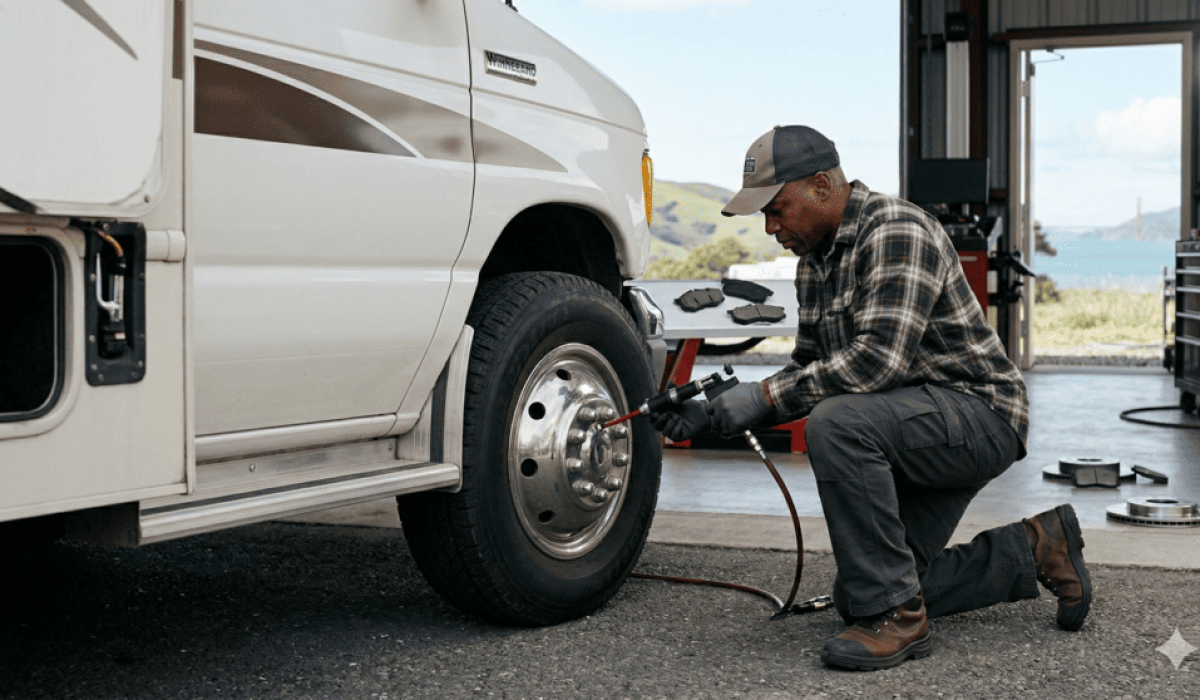
You’re planning spring trips from San Jose—Santa Cruz via steep Highway 17, Yosemite through mountain passes, or Lake Tahoe on winding I-80. Your RV’s brakes are the most critical safety system for these journeys, yet they’re often the most neglected.
After sitting through winter or accumulating miles from last season, your RV’s brake system needs professional inspection and service before tackling Bay Area’s mountain roads. Brake failure on a steep descent isn’t just inconvenient—it’s life-threatening and can result in catastrophic accidents.
This comprehensive brake service guide from Leale’s RV—serving San Jose and Bay Area RV owners for over 15 years—explains why brake maintenance is critical, what to watch for, when to get service, and how to safely navigate California’s mountain highways.
Why RV Brakes Need Special Attention
RVs are not cars:
Weight differences:
- Class A motorhome: 20,000-30,000+ lbs
- Travel trailer + truck: 15,000-25,000 lbs
- 5th wheel + truck: 20,000-35,000 lbs
- Passenger car: 3,000-4,000 lbs
Braking challenges:
- 5-10x more weight to stop
- Longer stopping distances (2-3x a car)
- More heat generation on descents
- Brake fade from overheating
- Component wear accelerated by weight
Mountain driving intensifies everything: Highway 17 to Santa Cruz drops 1,400 feet in 8 miles. Your brakes work continuously fighting gravity, generating extreme heat that can lead to brake fade or complete failure.
Signs Your RV Brakes Need Service NOW
Stop driving immediately if:
🚨 Grinding or scraping sounds – Metal on metal, pads worn through
🚨 Brake pedal goes to floor – Major brake fluid leak or failure
🚨 Pulling to one side – Uneven braking, caliper seized
🚨 Vibration when braking – Warped rotors
🚨 Burning smell – Overheated brakes
🚨 Warning lights – ABS or brake system light on
🚨 Soft or spongy pedal – Air in lines or fluid leak
Schedule service soon if:
⚠️ Squealing or squeaking when braking
⚠️ Brakes feel less responsive
⚠️ Longer stopping distances
⚠️ Pulsing brake pedal
⚠️ Low brake fluid level
⚠️ Brake pads under 3mm thickness
⚠️ Haven’t had service in 2+ years
⚠️ Planning mountain trip
Call Leale’s RV for inspection: (408) 286-5353
RV Brake System Components
Hydraulic Disc Brakes (Most Motorhomes)
How they work:
- Brake pedal applies pressure to master cylinder
- Hydraulic fluid flows to brake calipers
- Calipers squeeze brake pads against rotors
- Friction slows vehicle
Components that wear:
- Brake pads: Friction material wears down
- Rotors: Metal discs can warp or wear
- Calipers: Can seize or leak
- Brake lines: Can leak or corrode
- Brake fluid: Absorbs moisture, needs replacement
Service intervals:
- Brake pad inspection: Every 12 months or 12,000 miles
- Brake fluid replacement: Every 2-3 years
- Rotor inspection: Annually
- Complete system inspection: Before any mountain trip
Electric Trailer Brakes
Travel trailers and 5th wheels:
How they work:
- Brake controller in tow vehicle sends electric signal
- Magnets activate on trailer wheels
- Brake shoes press against drums
- Trailer slows independently
Components:
- Brake magnets: Can wear or fail
- Brake shoes: Friction material wears
- Drums: Can overheat or crack
- Brake controller: Calibration critical
- Wiring: Can corrode or short
Critical for safe towing: Trailer brakes MUST work properly. Without them, trailer can push tow vehicle on descents—extremely dangerous.
Service needs:
- Annual inspection minimum
- Brake controller calibration: Every 6 months
- Brake adjustment: As needed (usually annually)
- Magnet replacement: Every 3-5 years or when weak
Bay Area Mountain Roads: Why Brakes Matter
Highway 17 to Santa Cruz
The challenge:
- Elevation change: 1,400 feet
- Distance: 8 miles
- Grades: 6-7% sustained
- Traffic: Heavy, fast-moving
- Curves: Sharp, limited visibility
Brake demands:
- Continuous braking for miles
- Heat generation extreme
- Brake fade risk high
- No escape routes if brakes fail
Accident history: Multiple runaway vehicle incidents yearly on Highway 17. Don’t become a statistic.
Highway 9 to Big Basin
Characteristics:
- Winding two-lane road
- Steep sections
- No shoulders in places
- Narrow
- Slow speed required
Brake considerations:
- Frequent braking on curves
- Limited visibility
- No room for error
I-80 to Lake Tahoe
Winter/spring challenges:
- Long descents (Donner Summit)
- High elevation (7,000+ feet)
- Steep grades
- Weather complications
- Heavy truck traffic
Brake failure consequences:
- Runaway truck ramps available (use if needed)
- Brake checks at top of major grades
- Extreme danger if brakes fail
Highway 152 (Pacheco Pass)
Connecting San Jose to I-5:
- Steep grades both sides
- Truck route (heavy traffic)
- Hot summer temperatures
- Limited services
Proper Mountain Descending Technique
NEVER ride brakes continuously:
Correct method:
- Select lower gear BEFORE descent:
- Automatic: Use “2” or “L” position
- Manual: Drop to 2nd or 3rd gear
- Engine braking does most work
- Brake intermittently:
- Apply brakes firmly to reduce speed
- Release brakes to let them cool
- Repeat as needed
- “Snub braking” technique
- Monitor brake temperature:
- Stop at pullouts if brakes smell hot
- Let cool 10-15 minutes if needed
- Never continue with burning smell
- Maintain safe speed:
- Go slower than you think necessary
- 25-35 mph often appropriate
- Don’t let speed build
- Use jake brake if equipped:
- Engine compression braking
- Reduces service brake use
- Very effective on diesels
What NOT to do:
❌ Accelerate then brake hard repeatedly
❌ Ride brakes continuously
❌ Attempt to keep up with traffic
❌ Coast in neutral
❌ Ignore burning smells
RV Brake Service at Leale’s RV
Comprehensive brake inspection includes:
Visual inspection:
- Brake pad thickness measurement
- Rotor condition and thickness
- Caliper operation
- Brake line condition
- Wheel cylinder inspection (drum brakes)
- Hardware and spring condition
Functional testing:
- Brake pedal feel and travel
- Parking brake operation
- ABS system function
- No unusual sounds or vibration
- Even braking (no pulling)
Measurements:
- Brake pad remaining: ___mm (3mm minimum)
- Rotor thickness: ___mm (check against specs)
- Brake fluid condition: OK / Needs replacement
For trailers:
- Brake magnet strength testing
- Brake controller calibration
- Adjustment check
- Wiring inspection
- Breakaway system test
Written report with:
- Current brake condition
- Recommended services
- Priority level (immediate, soon, monitor)
- Cost estimates
Common RV Brake Repairs
Brake Pad Replacement
When needed:
- Pads under 3mm thickness
- Squealing constantly
- Reduced braking effectiveness
Service includes:
- New brake pads (ceramic or semi-metallic)
- Rotor resurfacing if needed
- Caliper lubrication
- Hardware replacement
- Brake fluid top-off
Time: 2-4 hours
Rotor Replacement/Resurfacing
When needed:
- Rotors warped (pulsing pedal)
- Below minimum thickness
- Scored or damaged
- With brake pad replacement
Options:
- Resurfacing
- Replacement
Brake Fluid Flush
When needed:
- Every 2-3 years (moisture absorption)
- Fluid dark or contaminated
- Spongy brake pedal
- Before any long trip
Service:
- Complete fluid exchange
- DOT 3 or DOT 4 (check manual)
- Bleed all brake lines
- Test pedal feel
Critical: Old brake fluid boils at lower temperature, causing brake fade.
Trailer Brake Service
Brake adjustment and inspection:
- Adjust all wheel brakes
- Test magnet strength
- Calibrate controller
- Check wiring
- Test operation
Brake replacement (trailer):
- New brake shoes and hardware
- New magnets if weak
- Drum inspection
Brake Service Intervals
Annual minimum:
- Complete brake inspection
- Fluid level check
- Visual pad check
- Rotor condition
- Parking brake test
Every 2-3 years:
- Brake fluid flush
- Complete service if needed
Before mountain trips:
- Thorough inspection
- Test braking performance
- Verify no issues
As needed:
- Any warning signs
- Unusual sounds or feel
- After 15,000-20,000 miles
Emergency: What If Brakes Fail?
If brakes fail on mountain descent:
- Stay calm – Panic makes it worse
- Downshift immediately:
- Manual: Drop to lowest gear
- Automatic: Use “L” or “1”
- Let engine slow you
- Use parking/emergency brake:
- Apply gradually (don’t lock wheels)
- Helps slow vehicle
- Better than nothing
- Look for escape:
- Uphill turnouts
- Runaway truck ramps
- Soft shoulder (gravel)
- Use friction if desperate:
- Scrape against guardrail (last resort)
- Better than head-on collision
- Call 911:
- Report situation
- Give location
- Request assistance
Prevention is everything: Get brakes serviced BEFORE mountain trips!
DIY Brake Checks
What you can check yourself:
Brake fluid level:
- Check reservoir (under hood)
- Between MIN and MAX lines
- Add only if significantly low
- Clear or light amber color (good)
- Dark brown or black (needs flush)
Visual pad check:
- Look through wheel spokes
- Pad should be visible
- At least 3mm thickness
- Even wear
Parking brake:
- Should hold vehicle on slight incline
- Shouldn’t require excessive force
- Releases completely
What requires professional:
- Actual pad measurement
- Rotor thickness and condition
- Caliper operation
- System bleeding
- Trailer brake adjustment
Preventive service is always cheaper and safer.
Special Considerations
Diesel Pushers
Advantages:
- Jake brake (exhaust brake)
- Tag axle brakes
- Air brakes (some models)
- Better stopping power
service needed:
- Regular inspections
- Pad/rotor replacement
- Fluid service
- Air system maintenance (air brakes)
Towable RVs
Critical importance:
- Trailer brakes prevent jackknifing
- Reduce stopping distance dramatically
- Required by law over certain weights
- Must be properly adjusted
Brake controller:
- Calibration essential
- Adjust for load
- Test before every trip
Older RVs
Additional concerns:
- Brake lines may be corroded
- Components may be obsolete
- Harder to find parts
- More frequent inspection needed
Schedule Your Brake Service Today
ensure your RV’s brakes are in perfect condition.Before your next spring mountain trip
📞 Call Leale’s RV: (408) 286-5353
📍 581 Race Street, San Jose, CA 95126
Pre-Mountain Trip Brake Special:
- Complete brake inspection
- Brake fluid check
- Written safety report
Don’t risk brake failure on Highway 17, Highway 9, or I-80. Get professional service from Bay Area’s trusted RV experts.
Frequently Asked Questions
Q: How often do RV brakes need service?
A: Inspection annually minimum. Service as needed based on wear. Brake fluid flush every 2-3 years.
Q: Can I drive to Yosemite with old brakes?
A: Not recommended. Mountain driving demands perfect brakes. Get inspection first.
Q: How do I know if my trailer brakes work?
A: Manual controller activation should slow trailer noticeably. Professional testing recommended.
Q: What’s brake fade?
A: When brakes overheat from continuous use, effectiveness drops dramatically. Very dangerous on descents.
Q: Do I really need brake service before Santa Cruz trip?
A: Highway 17 is serious mountain driving. Yes, brake check is essential for safety.
Don’t gamble with brake safety. Trust Leale’s RV to keep your family safe on Bay Area’s mountain roads!
Leale’s RV | 581 Race Street, San Jose, CA 95126 | (408) 286-5353
Serving San Jose, Santa Clara, Sunnyvale, Campbell, Los Gatos, Mountain View, and the entire Bay Area