

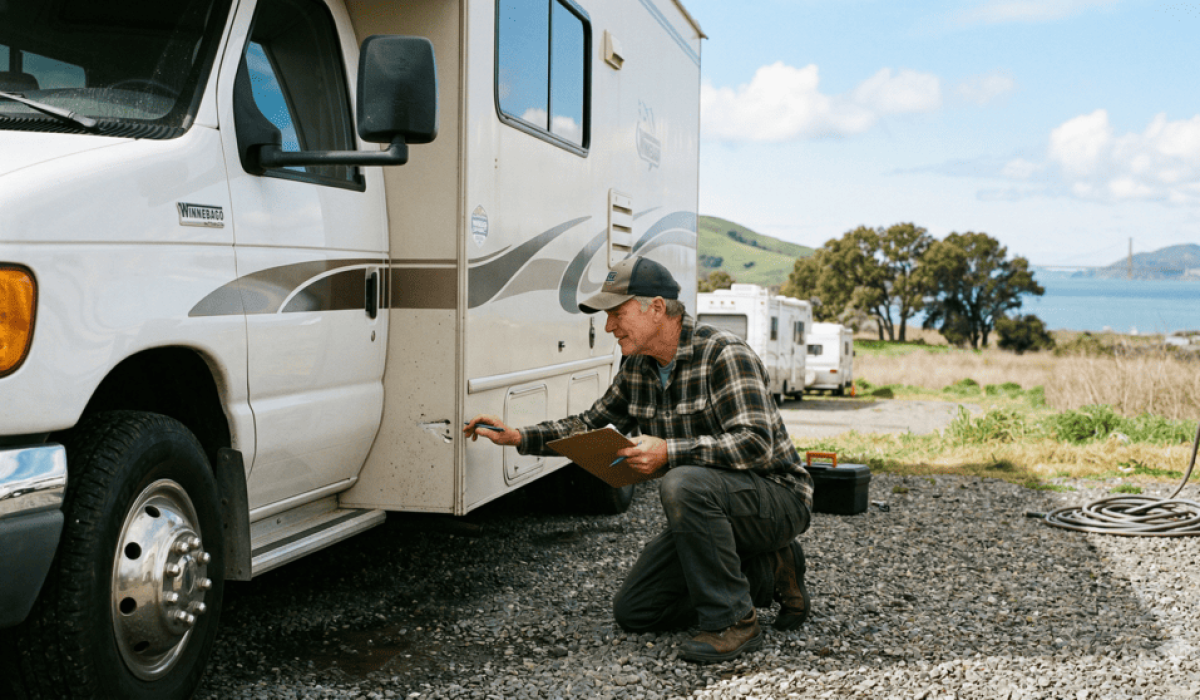
Bay Area’s 2025-2026 winter brought significant rainfall, temperature fluctuations, and challenging conditions for stored RVs. Now that we’re heading into spring, it’s critical to assess your RV for any winter-related damage before planning camping trips.
While California winters are mild compared to freezing climates, our unique weather pattern—heavy rain, temperature swings from 40°F to 70°F, high humidity, and occasional strong winds—can cause serious problems if left unchecked. Water damage, mold growth, rodent intrusion, and seal deterioration are common issues Bay Area RV owners discover when retrieving their vehicles from winter storage.
This comprehensive damage assessment guide from Leale’s RV helps San Jose and Bay Area RV owners identify winter damage early, understand what needs immediate attention, and prevent small issues from becoming expensive disasters.
Why Winter Damage Assessment is Critical Right Now
February/March is the perfect time because:
✅ Camping season approaching – Fix problems before your first trip
✅ Damage is recent – Easier and cheaper to repair now
✅ Parts available – Before spring rush creates backorders
✅ Shop availability – Schedule repairs before March-April crowds
✅ Insurance claims – Document damage while fresh
Waiting until your first trip risks:
- Discovering problems at the campground
- Emergency repairs at premium prices
- Cancelled family vacations
- Unsafe travel conditions
- More extensive damage from continued exposure
Bay Area Winter 2025-2026: What Your RV Faced
This winter’s challenges:
Heavy rainfall:
- San Jose received above-average precipitation
- Roof seals tested by repeated wet/dry cycles
- Water intrusion common in older RVs
Temperature fluctuations:
- Morning lows: 38-45°F
- Afternoon highs: 60-72°F
- These cycles stress seals and cause expansion/contraction
High humidity:
- Moisture buildup inside stored RVs
- Perfect conditions for mold growth
- Condensation issues common
Strong winds:
- January storms tested awning and roof-mounted accessories
- Tree debris and fallen branches caused damage
- Cover damage on outdoor-stored RVs
Complete Winter Damage Assessment Checklist
PRIORITY 1: Water Damage and Leaks (MOST CRITICAL)
Water damage is the #1 winter problem and the most expensive to repair if ignored.
Interior water damage signs:
□ Ceiling stains – Brown or yellow discoloration
□ Soft spots – Ceiling or walls feel spongy when pressed
□ Bubbling – Paint or wallpaper bubbling
□ Peeling – Wallpaper or fabric separating from walls
□ Musty odor – Smell of moisture or mildew
□ Visible mold – Black, green, or white spots
□ Damp carpet – Especially near entry doors or under windows
□ Warped cabinets – Swelling from water absorption
□ Stained upholstery – Water marks on furniture
Where to check for water damage:
- Under all windows
- Around roof vents
- Near AC unit
- Around skylights
- Entry door areas
- Slide-out rooms
- Bathroom and kitchen
- Under sinks
- Around refrigerator vent
Immediate action if you find water damage:
- Identify leak source
- Take photos for documentation/insurance
- Set up fans to dry wet areas
- Schedule professional inspection at Leale’s RV
- Don’t delay – mold grows within 24-48 hours
PRIORITY 2: Roof Inspection
Your roof took the brunt of winter weather. Thorough inspection is essential.
Roof damage to look for:
□ Sealant cracks – Around vents, AC, skylights
□ Sealant separation – Pulling away from surfaces
□ Missing sealant – Gaps where caulk should be
□ Membrane cracks – Splits in rubber roofing
□ Bubbling – Raised areas in roof membrane
□ Punctures – From tree branches or debris
□ Discoloration – Dark spots indicating water under membrane
□ Debris accumulation – Leaves, branches in roof valleys
□ Vent damage – Cracked or broken vent covers
□ AC unit issues – Loose mounting or damaged seals
How to inspect safely:
- Use ladder with stabilizers
- Have someone spot you
- Don’t walk on suspected soft spots
- Use binoculars from ground if uncomfortable with heights
Professional inspection recommended if:
- You see any bubbling or soft spots
- Multiple areas of concern
- Extensive cracking visible
- You’re uncomfortable on roof
- RV is tall or difficult to access
Leale’s RV roof inspection:
PRIORITY 3: Mold and Mildew
Bay Area’s winter humidity creates perfect mold conditions.
Where mold grows:
□ Bathroom (shower, around toilet, under sink)
□ Kitchen (under sink, around faucets)
□ Closets and cabinets
□ Behind furniture
□ Window areas
□ HVAC ducts
□ Refrigerator vents
□ Under mattresses and cushions
□ Ceiling corners
□ Slide-out rooms
Types of mold:
- White/gray – Often mildew, easier to clean
- Black – May be toxic, requires professional remediation
- Green – Common on fabrics and wood
- Orange/pink – Often in bathrooms, less harmful but unsightly
DIY mold removal (minor cases only):
- Wear mask and gloves
- Use vinegar or commercial mold cleaner
- Scrub affected areas
- Dry completely
- Increase ventilation
Professional remediation needed for:
- Mold covering more than 10 square feet
- Black mold (Stachybotrys)
- Mold in HVAC system
- Structural mold (in walls or ceiling)
- Health reactions when inside RV
PRIORITY 4: Rodent Damage
Winter drives mice and rats to seek shelter—often in stored RVs.
Signs of rodent activity:
□ Droppings (small dark pellets)
□ Urine odor
□ Chewed wiring
□ Gnawed insulation
□ Nesting materials (shredded paper, fabric)
□ Grease marks along walls
□ Scratching sounds
□ Food packages torn open
□ Holes in walls or floor
Where to check:
- Engine compartment (motorhomes)
- Under hood
- Storage compartments
- Behind appliances
- In cabinets and drawers
- Under sinks
- HVAC ducts
- Insulation areas
Health hazard: Rodent droppings carry diseases. Always wear mask and gloves when cleaning.
Cleanup process:
- Wear protective equipment
- Ventilate area thoroughly
- Spray droppings with disinfectant (don’t sweep)
- Wipe up with disposable towels
- Disinfect entire area
- Seal entry points
- Set traps if still active
Electrical damage from rodents: Chewed wiring can cause:
- Shorts and electrical fires
- System failures
Professional inspection recommended if extensive damage or electrical issues suspected.
PRIORITY 5: Tire Condition
California sun and sitting during winter damages tires.
Tire damage to inspect:
□ Sidewall cracks – Small cracks indicate UV damage
□ Age – Check DOT code (replace at 7 years)
□ Flat spots – From sitting in one position
□ Low pressure – Tires lose 1-2 PSI per month
□ Uneven wear – May indicate alignment issues
□ Bulges – Structural failure, replace immediately
□ Dry rot – Rubber deterioration
□ Tread depth – Minimum 4/32″ for RVs
DOT code location: Sidewall near rim
Reading DOT code:
- Last 4 digits = week and year manufactured
- Example: 2319 = 23rd week of 2019 (about 7 years old – REPLACE)
Immediate tire replacement if:
- Tires over 7 years old
- Sidewall cracks visible
- Any bulges
- Tread below 4/32″
Don’t risk tire failure – blowouts on highways are dangerous and expensive.
PRIORITY 6: Battery Health
Batteries deteriorate during storage, especially in fluctuating temperatures.
Battery problems to check:
□ Low voltage (under 12.4V)
□ Won’t hold charge
□ Corroded terminals
□ Low electrolyte (flooded batteries)
□ Swollen case
□ Sulfation (white powder on terminals)
□ Age over 3-4 years
□ Cracks or damage
Testing batteries:
- Check voltage with multimeter (should be 12.6V+ when fully charged)
- Load test (auto parts stores often do free)
- Check water levels (flooded batteries)
- Inspect for physical damage
Battery maintenance:
- Clean terminals with baking soda solution
- Apply anti-corrosion spray
- Charge fully before use
- Replace if failing load test
PRIORITY 7: Seal and Caulk Deterioration
Temperature cycles crack seals and caulking.
Where seals fail:
□ Windows and window frames
□ Entry doors
□ Cargo bay doors
□ Slide-out seals
□ Roof vents
□ Skylights
□ AC unit mounting
□ Antenna base
□ Refrigerator vent
□ Access panels
How to check seals:
- Visual inspection for cracks
- Feel for soft or hard spots (should be pliable)
- Look for separation from surface
- Check for discoloration
The “poke test”: Gently poke sealant with finger:
- Good: Slightly soft, pliable, bounces back
- Bad: Hard, cracks when pressed, pulls away from surface
Bay Area factor: Our temperature swings accelerate seal failure. Annual resealing recommended vs. 3-year cycle elsewhere.
PRIORITY 8: Awning and Exterior Accessories
Winter storms stress awnings and roof-mounted items.
Awning damage:
□ Fabric tears or holes
□ Mold or mildew on fabric
□ Bent or damaged arms
□ Broken springs
□ Motor failure (electric awnings)
□ Won’t extend or retract properly
Other accessories: □ Damaged vent covers □ Loose or missing ladder □ Broken exterior lights □ Damaged steps □ Loose satellite dish or antenna
Action needed:
- Small tears: Patch kits available
- Extensive damage: Fabric replacement
- Structural damage: Professional repair
- Safety issue: Don’t use until repaired
PRIORITY 9: Mechanical Systems (Motorhomes)
Engine issues from sitting:
□ Won’t start
□ Rough idle
□ Warning lights
□ Fluid leaks
□ Unusual sounds
□ Smoke from exhaust
What causes winter mechanical problems:
- Stale fuel (breaks down after 30 days)
- Oil settling and condensation
- Battery drain
- Corrosion on connections
- Coolant issues
Before first drive:
- Check all fluid levels
- Inspect for leaks
- Verify battery charged
- Check tire pressure
- Test all lights
- Warm up engine properly
Professional service recommended:
- Oil change if sat 6+ months
- Brake inspection
- Complete mechanical check
Bay Area-Specific Winter Damage
Damage from Atmospheric Rivers
This winter’s heavy rain systems caused unique problems:
Common issues:
- Roof leaks from overwhelmed drainage
- Window seal failures
- Door seal water intrusion
- Underbody water damage
- Slide-out flooding
Wildfire Aftermath Effects
Areas near 2024 fire zones may have experienced:
- Ash accumulation on roof
- Air filter clogging
- Exterior discoloration
- Corrosive ash residue
Solution: Thorough washing and filter replacement
Coastal Storage Considerations
RVs stored near coast faced:
- Salt air corrosion
- Higher humidity
- Faster seal deterioration
- Metal corrosion acceleration
When to Call Leale’s RV for Professional Assessment
Schedule professional inspection if you find:
🚨 Any water damage or active leaks
🚨 Mold covering large areas
🚨 Extensive rodent damage
🚨 Multiple systems not working
🚨 Structural concerns
🚨 Electrical problems
🚨 Propane odors
🚨 Mechanical issues
Why professional assessment matters:
- Identifies hidden damage
- Prevents safety hazards
- Catches problems early
- Provides repair estimates
- Documents for insurance claims
Leale’s comprehensive assessment includes:
- Complete interior and exterior inspection
- Moisture meter testing
- Electrical system check
- Plumbing pressure test
- Roof inspection
- Mechanical evaluation (motorhomes)
- Written report with photos
- Prioritized repair recommendations
Insurance Claims for Winter Damage
What’s typically covered:
✅ Storm damage (wind, rain, falling trees)
✅ Theft or vandalism
✅ Collision damage (if applicable)
What’s usually NOT covered:
❌ Neglect or lack of maintenance
❌ Gradual deterioration
❌ Wear and tear
❌ Rodent damage (unless special coverage)
❌ Mold from neglected leaks
Filing winter damage claims:
- Document all damage with photos
- Note date damage discovered
- Contact insurance promptly
- Get professional estimate
- Keep all receipts
Leale’s RV helps with insurance claims:
- Detailed damage documentation
- Professional estimates
- Photos for adjuster
- Direct billing (when available)
- Supplement negotiations
Preventing Future Winter Damage
For next winter:
Proper storage prep:
- Complete winterization
- Roof resealing before winter
- Tire covers
- Vent covers
- Pest deterrents installed
Indoor vs outdoor storage:
- Indoor eliminates most winter damage
- Protects from rain, UV, temperature
- Prevents rodent access
- Maintains stable environment
Leale’s indoor storage:
- First month FREE (new customers with 6 month lease)
- 10% off all service
- Free annual inspection
- Climate-protected facility
Monthly winter checks:
- Visit RV once per month
- Check for leaks or issues
- Run generator
- Check batteries
- Look for rodent signs
Schedule Your Winter Damage Assessment Today
Don’t wait until your first camping trip to discover winter damage. Get professional assessment now while there’s time to make repairs.
📞 Call Leale’s RV: (408) 286-5353
🗓️Schedule Assessment Online →
📍 581 Race Street, San Jose, CA 95126
Protect your investment—identify and repair winter damage before it gets worse. Trust Leale’s RV’s 15+ years of experience serving Bay Area RV owners.
Leale’s RV | 581 Race Street, San Jose, CA 95126 | (408) 286-5353
Serving San Jose, Santa Clara, Sunnyvale, Campbell, Los Gatos, Mountain View, and the entire Bay Area